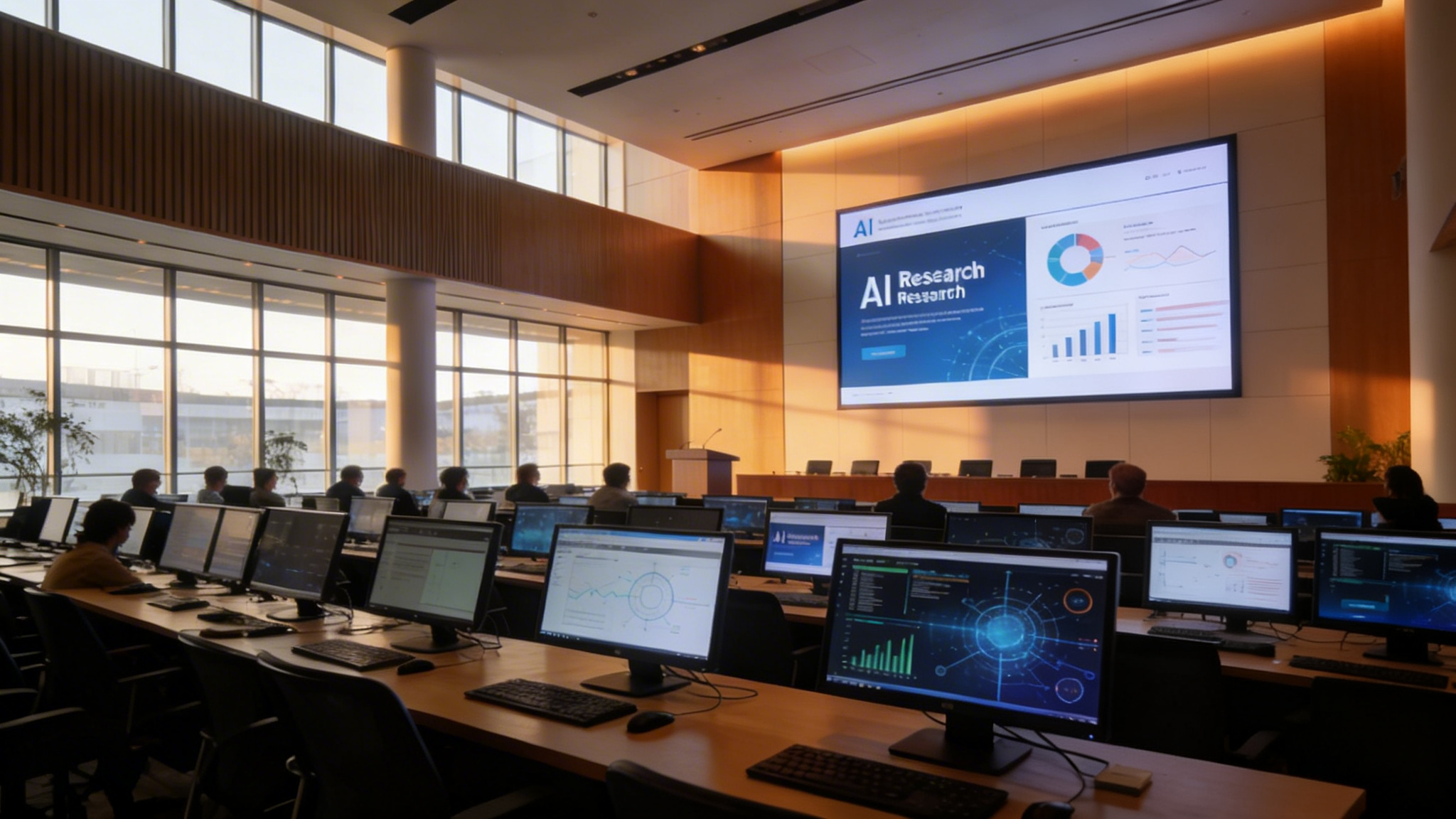
India positioned itself at the center of global artificial intelligence discussions this week, hosting a landmark AI summit in New Delhi that drew commitments of $68 billion in AI and cloud infrastructure investments through 2030. Tech giants Google, Microsoft, and Amazon led the pledge announcements, with CEOs and senior executives gathering to discuss AI deployment across emerging markets.
The summit attracted over 250,000 visitors, straining New Delhi's hospitality infrastructure and driving luxury hotel prices to unprecedented levels. Key speakers included Google CEO Sundar Pichai, OpenAI CEO Sam Altman, and Reliance Industries Chairman Mukesh Ambani, representing a convergence of American tech leadership and Indian business interests around AI development.
Indian officials framed the gathering around the theme of "welfare for all," emphasizing AI's potential to address development challenges across the Global South. The summit comes as India seeks to establish itself as a major AI hub while navigating concerns about technology's impact on traditional employment sectors, particularly IT services and call centers that form a significant portion of the country's export economy.
Industry analysts estimate that AI automation could affect substantial portions of India's business process outsourcing sector, which employs millions and generates billions in annual revenue. Call center operations, in particular, face potential disruption as conversational AI systems become more sophisticated and cost-effective for international clients.
The investment commitments signal a fundamental shift in how global technology companies view emerging markets for AI deployment. Unlike previous technology waves that primarily benefited developed economies, AI infrastructure investments could create new trading dynamics across currency and commodity markets. The Indian rupee has shown increased volatility around major tech announcements, reflecting market uncertainty about whether AI investments will strengthen or strain the country's current account balance.
Currency traders are watching how massive infrastructure spending translates into actual economic activity. Historical patterns suggest that announced investments often take years to materialize, creating potential gaps between market expectations and real capital flows. The scale of these commitments could influence broader emerging market currencies if similar investment patterns emerge across other developing economies.
Metal markets may see indirect effects as AI data centers require substantial copper, rare earth elements, and other industrial materials. Gold has traditionally served as a hedge during periods of technological disruption, particularly when employment concerns create broader economic uncertainty.
Major technology announcements increasingly drive short-term currency and commodity volatility, creating challenges for traditional discretionary trading approaches. Markets often react immediately to investment headlines, only to reverse course as investors assess the timeline and actual implementation of announced projects. These whipsaw movements require systematic approaches that can distinguish between noise and genuine trend developments.
Growth One's algorithmic trading systems are designed to navigate these technology-driven market shifts across Forex and Metal markets. The platform's three-stage validation process becomes particularly valuable during periods when traditional correlations break down due to sector-specific news flow. When currency pairs react to tech sector developments, the system's pattern recognition capabilities help identify whether movements represent temporary volatility spikes or longer-term trend shifts that warrant position adjustments.
.svg)

