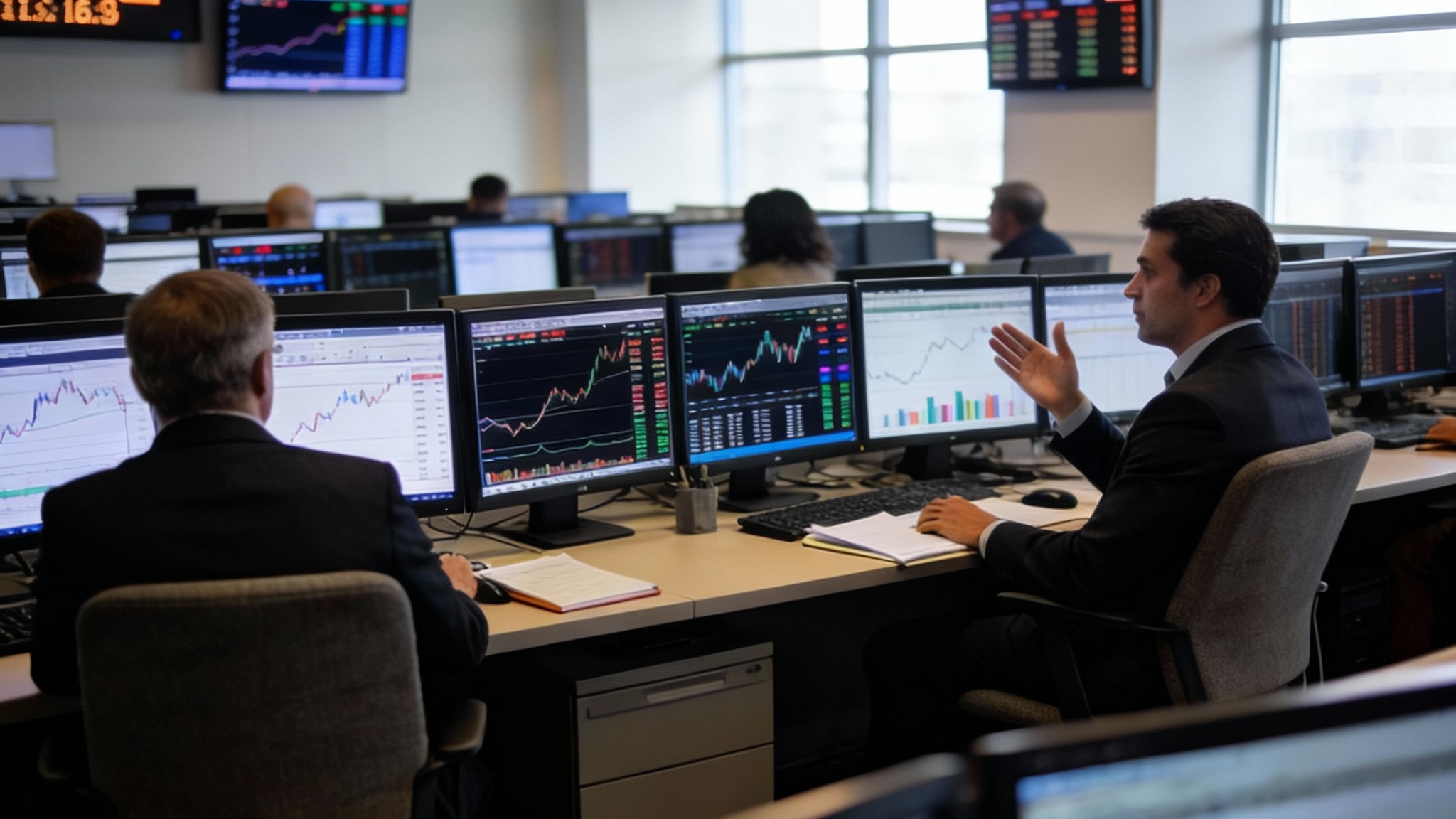
IG Group Holdings delivered a robust quarterly performance with organic trading revenue climbing 29% for the period ended November 30. Net trading revenue reached £270.7 million, driven by significant customer acquisition gains and strategic market expansion efforts. The company's performance reflects broader momentum in retail trading platforms amid continued market volatility.
The London-based trading platform announced an expanded share buyback program, increasing the commitment from £75 million to £200 million. The extended program is expected to conclude by March 31, 2026, signaling management confidence in the company's cash generation capabilities and growth trajectory. This represents one of the more aggressive capital return strategies among UK-listed trading platforms.
Customer acquisition emerged as a key growth driver, with IG highlighting particularly strong performance in the U.S. market, which the company identified as its fastest-growing region. The firm's subsidiary Freetrade also delivered robust results, contributing to overall revenue momentum. IG's diversified geographic footprint has helped capture trading activity across multiple time zones and regulatory environments.
Looking ahead, IG management projects approximately £630 million in revenue for the transitional financial year, representing a 3% increase. Full-year guidance calls for around £1.1 billion in revenue, marking a 5% year-over-year growth rate. These projections reflect expectations for sustained retail trading interest and continued market expansion initiatives.
IG's strong performance highlights the ongoing evolution in retail trading dynamics. The 29% revenue surge demonstrates how established platforms can capitalize on increased market participation, particularly during periods of heightened volatility. The company's success in customer acquisition suggests that traders are gravitating toward platforms offering comprehensive market access and sophisticated trading tools.
The expanded buyback program signals management's view that current market conditions favor aggressive capital allocation strategies. With £200 million earmarked for share repurchases, IG is betting on continued strong cash flows from trading commissions and spreads. This approach contrasts with companies that are hoarding cash amid economic uncertainty, suggesting IG sees sustained demand for its services.
The geographic diversification strategy, particularly the strong U.S. performance, demonstrates how trading platforms can benefit from regulatory arbitrage and varying market conditions across regions. As different central banks pursue divergent monetary policies, platforms with global reach can capture trading opportunities that emerge from these policy differentials.
IG's success reflects broader trends in how sophisticated traders approach today's markets. While retail platforms focus on user acquisition and interface improvements, institutional and semi-institutional traders increasingly rely on systematic approaches to navigate complex market conditions. The volatility that drives retail trading volume also creates opportunities for algorithmic strategies that can process multiple market signals simultaneously.
Growth One's algorithmic trading platform operates in this environment where retail and institutional trading volumes intersect. Focusing on Forex and Metal markets, the system combines quantitative analysis with trader expertise to identify opportunities across currency correlations and precious metals price movements. The platform's three-stage validation process ensures strategies can handle the type of market conditions that drive both retail platform revenues and institutional trading opportunities. Rather than competing with retail platforms, systematic trading approaches like Growth One's complement market activity by providing disciplined, risk-managed strategies that adapt to changing volatility patterns.
.svg)

