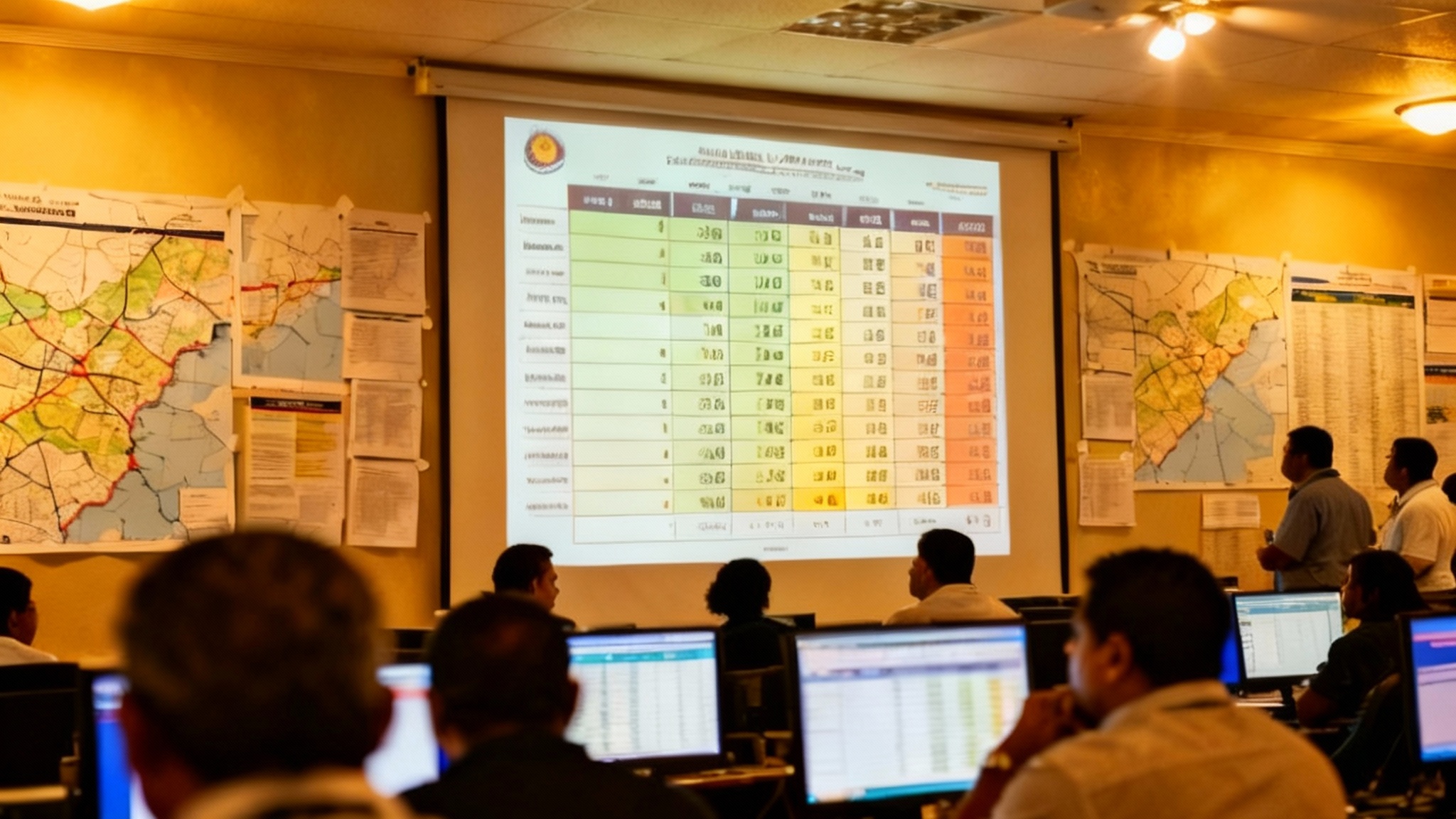
Honduras faces political uncertainty as its presidential election remains too close to call, with candidates Nasry Asfura and Salvador Nasralla virtually tied at just under 40% of the vote each. Asfura, who has received backing from former U.S. President Donald Trump, maintains a razor-thin lead of 515 votes as technical issues plague the electoral results website and counting procedures.
The electoral authority has urged patience as vote tabulation continues, but both campaigns are already disputing preliminary results. Nasralla claims his internal projections show him ahead, while concerns mount over electoral integrity in what observers describe as Honduras's most polarized election in recent memory. Outgoing President Xiomara Castro has called for vigilance during the counting process, highlighting tensions that have characterized the campaign.
The election takes place against a backdrop of economic challenges and governance issues that have defined Honduran politics in recent years. Both candidates have faced scrutiny over their policy platforms, with voters expressing concerns about corruption, crime, and economic opportunities. The technical problems with vote reporting have further complicated an already contentious electoral process.
A significant foreign policy shift appears likely regardless of the winner, as both Asfura and Nasralla have indicated they would restore diplomatic relations with Taiwan. This potential change would mark a departure from Honduras's current alignment with Beijing, established under the previous administration in 2023.
Political uncertainty in Central America typically creates volatility in regional currency markets, though Honduras's limited economic integration means direct global market impact remains contained. The prolonged vote count and fraud allegations could extend this uncertainty, potentially affecting the Honduran lempira and creating ripple effects through regional trading relationships.
More significantly, the Taiwan relationship shift signals broader geopolitical realignment that could influence trade flows and foreign investment patterns. Taiwan's return to diplomatic recognition often comes with substantial infrastructure investment commitments, which historically impact local currency stability and commodity demand. These policy shifts create the type of political risk that systematic trading approaches are designed to navigate.
The election outcome may also influence regional migration patterns and remittance flows, factors that indirectly affect dollar demand and emerging market currency dynamics. While Honduras itself represents a small market, electoral instability in Central America often correlates with broader Latin American political trends that can move larger currency pairs.
Electoral uncertainty exemplifies the type of political risk that requires systematic monitoring across multiple timeframes. Rather than attempting to predict specific outcomes, effective algorithmic trading systems focus on how political events typically translate into market volatility patterns and correlation changes.
Growth One's algorithmic trading platform incorporates political risk assessment into its multi-stage validation process, analyzing how similar electoral scenarios have historically affected currency and precious metals markets. The system's focus on Forex and Metals markets allows it to capture opportunities that emerge from political uncertainty, such as flight-to-quality moves into gold during periods of emerging market instability. Through rigorous backtesting that includes various political crisis scenarios, the platform maintains disciplined position sizing while adapting to the volatility spikes that often accompany contested elections and policy uncertainty.
.svg)

