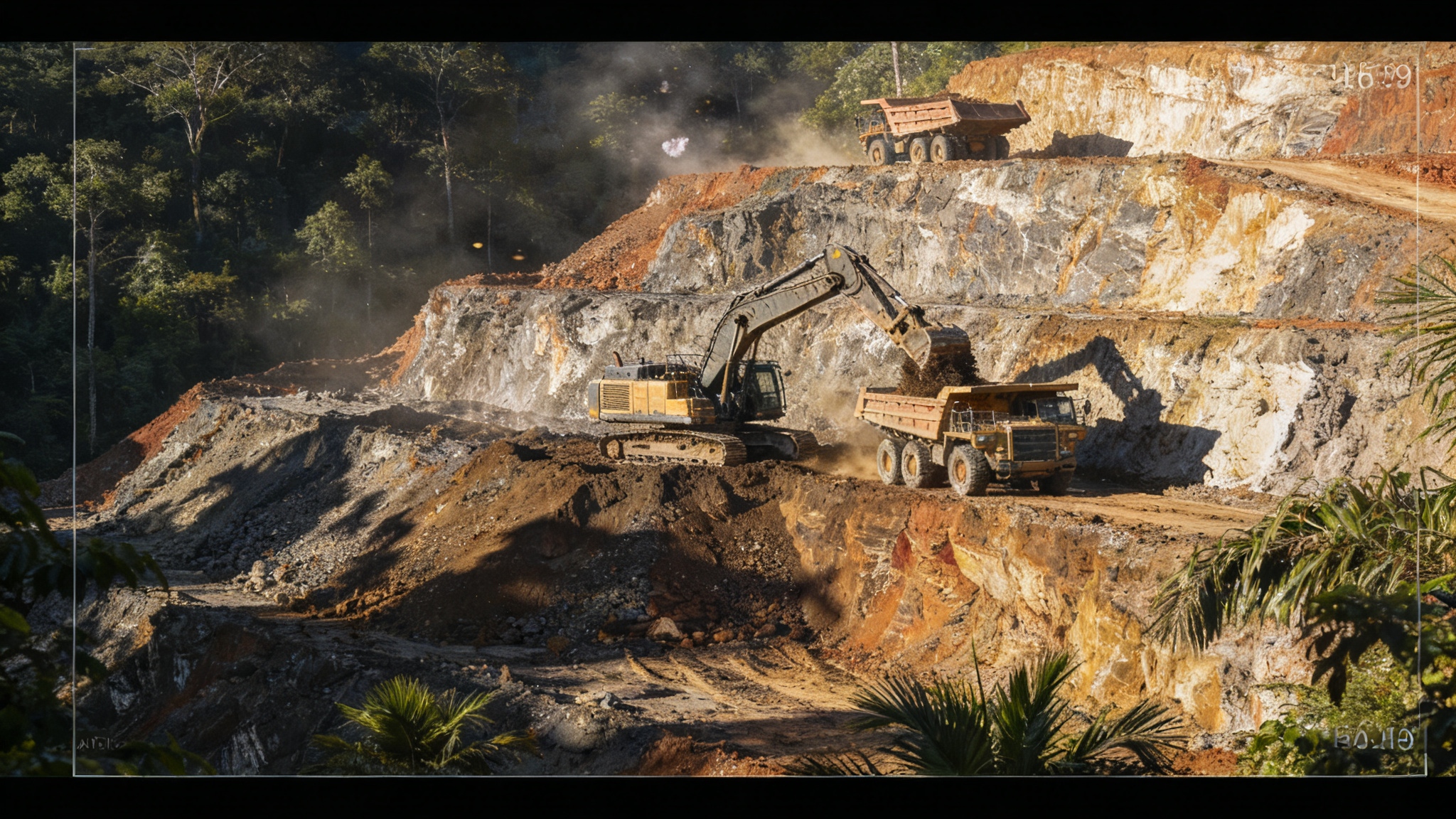
Dominican Republic President Luis Abinader suspended all activities related to the GoldQuest mining project on Friday following massive protests that brought thousands of demonstrators to the streets over environmental concerns. The decision affects the Romero Project, a gold exploration venture operated by Canadian mining firm GoldQuest Mining Corp, which has been conducting preliminary assessments in the country's northeastern region.
The suspension comes as the project remains in its environmental assessment phase, with no active extraction currently underway. Protesters expressed deep concerns about potential contamination of local water sources and damage to agricultural lands that support rural communities. The demonstrations represented one of the largest environmental mobilizations in recent Dominican history, with participants traveling from across affected provinces to voice opposition.
GoldQuest has maintained that its proposed extraction methods would minimize environmental impact compared to traditional mining techniques. The company previously committed to implementing advanced water treatment systems and limiting surface disruption. However, community skepticism persists, fueled by past mining incidents across Latin America where promised environmental safeguards failed to prevent contamination.
President Abinader emphasized the government's commitment to transparency and environmental protection, stating that any future development must undergo rigorous scrutiny. The Dominican Republic has struggled to balance economic opportunities from its mineral resources against environmental preservation, particularly as mining revenues could provide significant foreign currency earnings for the developing nation.
The suspension highlights growing global resistance to traditional mining operations, particularly in regions where environmental concerns outweigh economic benefits. Gold mining projects face increasing scrutiny from both local communities and international investors focused on environmental, social, and governance criteria. This trend is reshaping how precious metals extraction companies approach new developments and existing operations.
The decision creates immediate uncertainty for gold markets, particularly regarding supply projections from the Caribbean region. While the Dominican Republic is not a major gold producer globally, project suspensions often trigger reassessments of mining company valuations and regional supply chains. Political risk in mining ventures has become a critical factor for commodity traders monitoring precious metals markets.
Currency markets may also reflect this development, as mining revenues typically strengthen local currencies through foreign investment and export earnings. The Dominican peso could face pressure if similar projects encounter resistance, while gold prices may see modest support from reduced future supply expectations.
Political developments affecting mining operations create the type of supply-side uncertainty that systematic trading approaches are designed to handle. Unlike headline-driven speculation, algorithmic systems can process multiple data streams to identify genuine market impacts versus temporary noise from individual project disruptions.
Growth One's dual focus on precious metals and currency markets positions its systems to capture opportunities arising from these interconnected dynamics. When mining projects face political challenges, the platform's algorithms monitor correlations between metal prices, affected currencies, and broader commodity market sentiment. The three-stage validation process ensures strategies perform reliably during periods when political risk disrupts traditional supply-demand calculations. This systematic approach helps navigate the complex relationship between geopolitical events and commodity price movements, distinguishing between short-term volatility and longer-term structural shifts in metals markets.
.svg)

