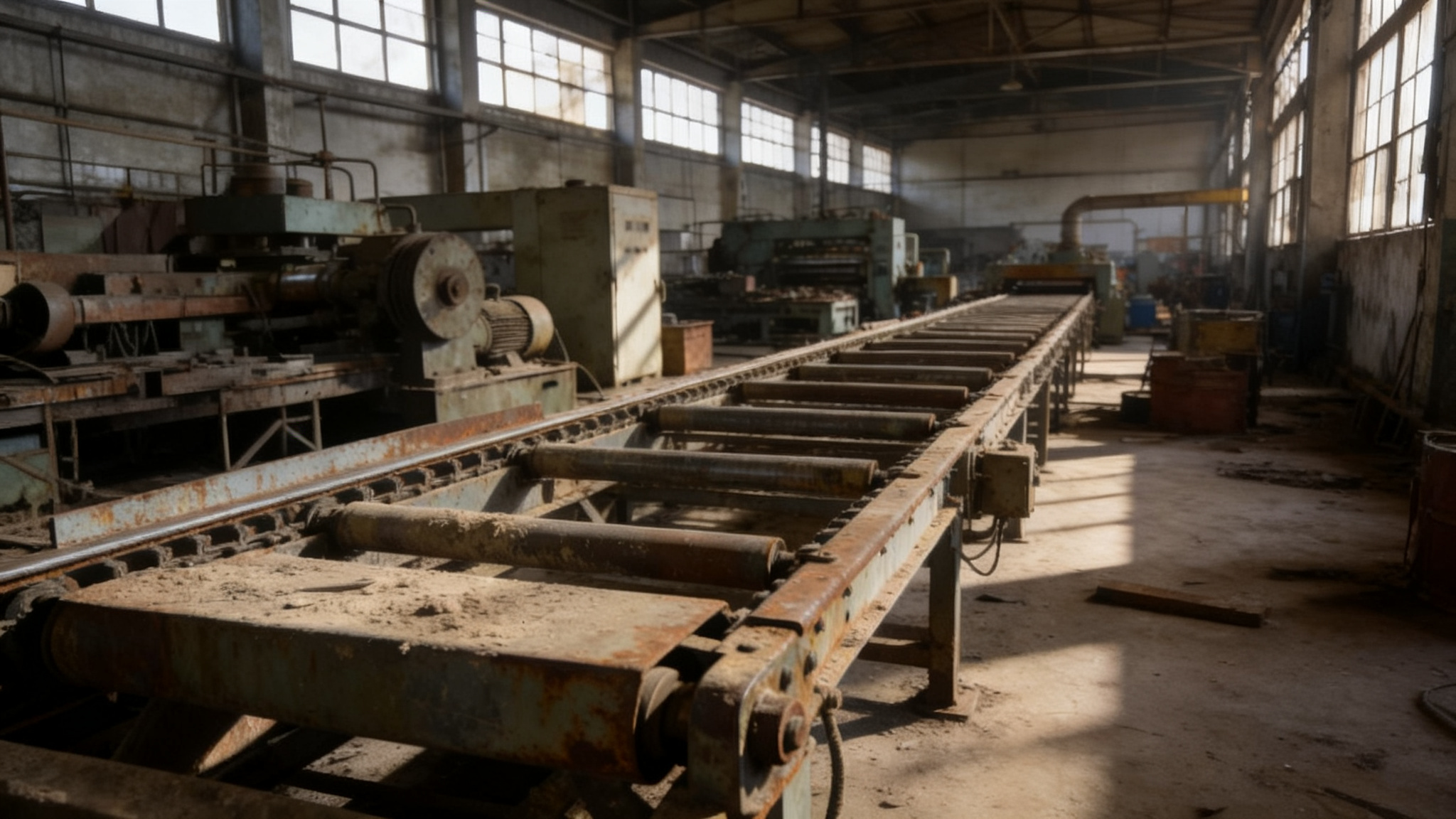
China's factory activity stalled in May as the official manufacturing purchasing managers' index (PMI) fell to 50.0 from 50.3 in April, marking the weakest reading in three months. The decline reflects a combination of seasonal disruptions from extended holidays and mounting pressure from higher input costs, according to data released by the National Bureau of Statistics.
The manufacturing PMI sits at the critical 50.0 threshold that separates expansion from contraction, indicating neither growth nor decline in factory activity. This represents a concerning trend for the world's second-largest economy, which has struggled to maintain momentum following its post-pandemic recovery. Meanwhile, the non-manufacturing PMI offered a brighter picture, rising to 50.1 from 49.5 in April, driven primarily by expansion in construction and services sectors.
Economists have increasingly noted signs of a broader economic slowdown, prompting the People's Bank of China to implement supportive monetary policy measures. The central bank has lowered interest rates and introduced additional stimulus to bolster economic growth amid persistent deflationary pressures and weak domestic demand. These policy responses underscore growing concerns about China's economic trajectory and its ability to meet annual growth targets.
Despite domestic headwinds, China's export sector continues to demonstrate resilience, particularly in technology-related products driven by global demand for artificial intelligence components and equipment. However, this strength faces new challenges as the yuan has strengthened against major trading partners' currencies, potentially eroding the competitiveness of Chinese exports in international markets.
The PMI data reinforces expectations for continued monetary easing from the People's Bank of China, which typically weakens the yuan against major currencies. A softer Chinese currency could provide relief for exporters while potentially supporting global commodity demand as Chinese imports become more price-competitive. This dynamic particularly affects metal markets, where China remains the world's largest consumer of industrial materials.
The mixed economic signals from China create complex trading conditions across currency pairs involving the yuan. While manufacturing weakness suggests further policy support, the resilience of the export sector and services activity prevents a clear directional bias. Such uncertainty often leads to increased volatility in USD/CNY and other yuan crosses as traders adjust positions based on evolving policy expectations.
Economic transitions in major economies like China create ripple effects across global currency and metal markets that require sophisticated analysis to navigate effectively. Traditional trading approaches often struggle with the multiple timeframes and cross-market relationships that emerge during periods of policy uncertainty and mixed economic data.
Growth One's algorithmic trading platform addresses these challenges through its multi-stage validation process, analyzing how currency correlations shift when major economies implement stimulus measures while facing export pressures. The system's focus on both Forex and Metal markets allows it to identify opportunities when Chinese policy changes affect industrial commodity demand alongside yuan positioning, adapting to changing market conditions rather than relying on static trading rules.
.svg)

