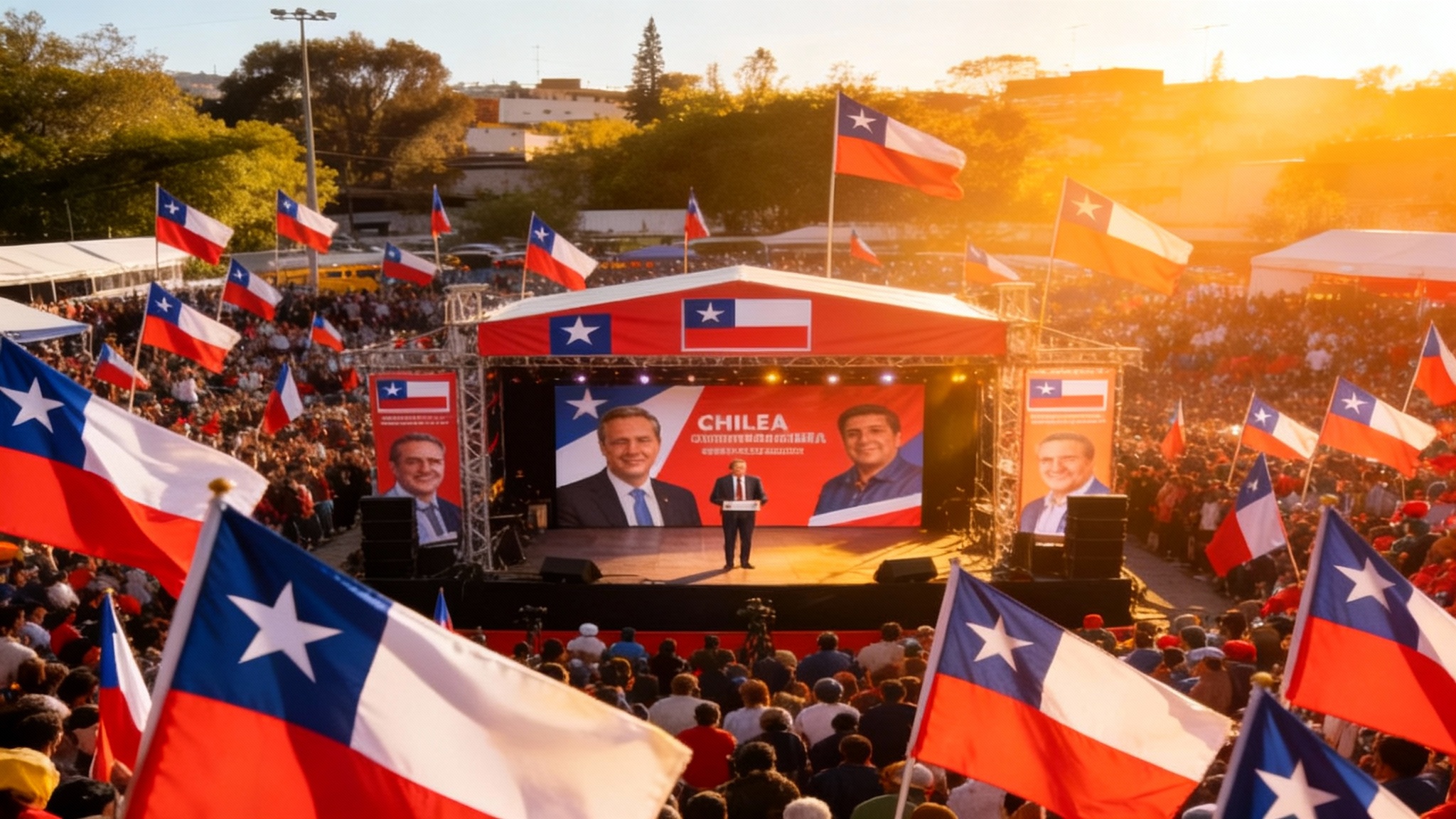
Chile stands at a political crossroads as voters prepare for a presidential runoff election that could deliver the most significant ideological shift in decades. The contest pits far-right candidate Jose Antonio Kast against leftist Jeannette Jara, with approximately 15.6 million registered voters set to decide the nation's trajectory on economic policy, security measures, and international trade relationships.
Kast has positioned himself as the law-and-order candidate, promising to restore security in response to rising organized crime and immigration-related challenges that have plagued Chile under the current administration. His campaign has focused heavily on these domestic concerns while advocating for market-friendly economic reforms that have drawn support from the business community and international investors.
The election occurs against the backdrop of President Gabriel Boric's struggling approval ratings, with voters expressing dissatisfaction over his handling of crime and economic management. Boric's leftist policies have faced criticism from investors concerned about regulatory uncertainty and fiscal expansion, creating an opening for Kast's pro-business platform.
This election marks Chile's first under a mandatory voting system, potentially reshaping the electoral landscape by forcing previously disengaged citizens to participate. Political analysts suggest this requirement could benefit either candidate depending on how undecided voters break, adding an element of unpredictability to an already closely watched contest.
Chilean peso volatility has increased in the weeks leading up to the runoff, reflecting investor uncertainty about the country's economic direction. Currency traders are closely monitoring polling data and policy statements from both candidates, as their divergent approaches to fiscal policy, mining regulations, and trade relationships could significantly impact the peso's trajectory against major currencies.
A Kast victory would likely strengthen the peso in the near term, as investors anticipate more market-friendly policies including potential tax reforms and reduced regulatory burden on key industries like copper mining. Conversely, a Jara win could trigger peso weakness as markets price in the continuation of expansionary fiscal policies and potential increases in mining royalties that have weighed on investor sentiment.
The election's outcome will also influence broader Latin American currency correlations, particularly affecting trading relationships between the Chilean peso, Brazilian real, and Mexican peso. Regional investors often view Chilean elections as a bellwether for political stability and economic policy direction across the continent.
Political transitions create unique market conditions where traditional economic correlations can break down temporarily as investors reassess risk premiums. Currency pairs involving emerging market economies often experience heightened volatility during election periods, requiring trading systems that can distinguish between temporary political noise and fundamental economic shifts.
Growth One's algorithmic trading platform is designed to navigate these politically sensitive periods through its multi-stage validation process that includes backtesting across previous Latin American elections and policy transitions. The system monitors peso-dollar correlations alongside precious metals movements, as political uncertainty in copper-producing nations often drives investors toward safe-haven assets like gold and silver. When election outcomes create sustained policy changes rather than temporary volatility, the algorithms adjust positioning across both currency and metals markets to capture longer-term trend developments while maintaining disciplined risk management throughout the transition period.
.svg)

